

Keygree KG Series Welding Robots: AC/DC Integrated Intelligent Welding for Multi-Material Manufacturing
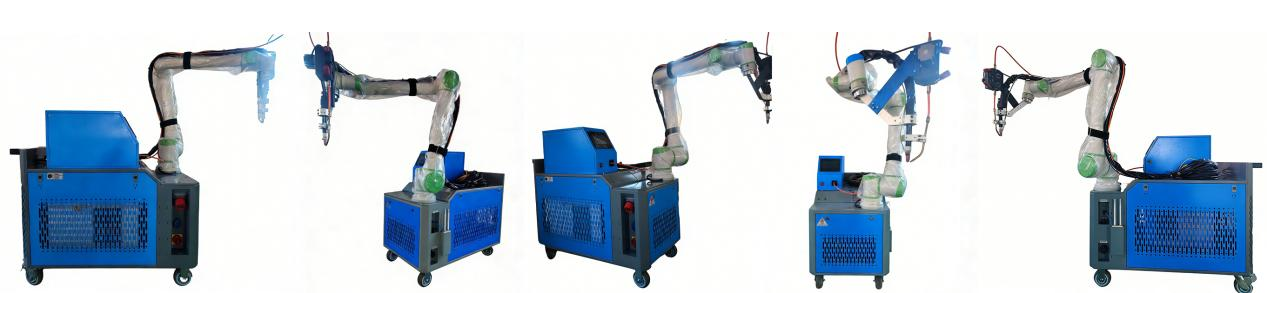
For manufacturers handling carbon steel, stainless steel, and aluminum alloys in the same workshop, welding automation often means compromising between equipment investment, material quality, and process stability.
The Keygree KG-1500-AC PTIG / KG-1500-DC PTIG welding robots were developed to eliminate this trade-off—delivering AC/DC compatibility, pulse welding, and push-pull wire feeding in a single automated solution.
1.Overcoming compatibility and quality challenges in multi-material welding
In many manufacturing scenarios, workshops need to handle various metal materials such as carbon steel, stainless steel, and aluminum alloys. Traditional solutions often require the purchase of specialized welding machines with different characteristics, resulting in high equipment investment and cumbersome changeovers. The core advantage of the Keygree KG series lies in its ability to support both AC and DC outputs in a single unit, integrating pulse welding functionality. This means that the same robotic workstation can perform high-quality welding on different materials, such as stainless steel (commonly using DC TIG) and aluminum alloys (which require AC TIG to remove the oxide film), without changing the power supply, based on program calls. Its pulse function, through precise control of peak current, base current, and frequency, significantly reduces overall heat input and workpiece deformation, which is particularly beneficial for thin-plate welding and all-position welding, and can create aesthetically pleasing fish-scale weld seams. This multi-material adaptability directly solves the pain points of low equipment utilization and high changeover costs in multi-variety, small-batch production.
2.Overcoming the technological bottlenecks in aluminum alloy welding
Aluminum alloys, due to their high thermal conductivity, susceptibility to oxidation, and difficulty in controlling the weld pool, place higher demands on automated welding. The KG-1500-AC PTIG model is specifically optimized for this purpose. Its AC output ensures stable cathode cleaning, effectively removing the high-melting-point alumina film on the aluminum alloy surface. More importantly, this robot is equipped with a "push-pull wire" feeding system for AC welding. In aluminum alloy welding, traditional "wire push" methods are prone to unstable wire feeding and wire jamming due to soft welding wire and high resistance in the wire feeding tube. The push-pull wire system adds a wire pulling motor at the welding torch, working in conjunction with the wire push motor of the wire feeder to achieve stable wire feeding over long distances with high precision. This is crucial for ensuring a stable weld pool and weld formation in continuous aluminum alloy welding. This design effectively solves a long-standing engineering problem in robotic welding of aluminum alloys.
3.Improving stability and adaptability under complex operating conditions
In actual production, workpiece assembly deviations and weld position misalignments caused by thermal deformation are common problems affecting the quality of robotic welding. Although the search results do not directly indicate whether the KG series integrates a vision system, as a modern robotic welding unit, its design inevitably reserves the possibility of integration with external sensing systems such as weld tracking and adaptive welding. Adaptive welding technology can detect bevel dimensions in real time through sensors and dynamically adjust welding parameters (such as wire feed speed and current) to compensate for assembly errors. Combined with the KG series' precise pulse waveform control capabilities (such as square waves and triangular waves), the robot can achieve refined management of the molten pool, thereby maintaining the stability and consistency of welding quality in applications with large tolerances, such as steel structure and heavy equipment manufacturing.
AC/DC integrated AC/DC output compatible, integrated pulse welding Single-machine welding of multiple metals (steel, aluminum, etc.) reduces equipment investment and simplifies production changeover.
Pulse welding Peak/base current, frequency, and duty cycle adjustable Controlling heat input reduces deformation, improves the quality of thin plate and all-position welding, and enhances weld appearance.
Push-pull wire feeding (AC) Coordinated wire push and draw motors Achieving long-distance stable wire feeding for aluminum alloy welding ensures stable welding process.
Process compatibility Supports waveform adjustment and parameter storage Adapting to diverse welding process requirements facilitates the solidification and application of experience.
Expanding Applications and Future Value of KG Series Welding Robots
1.Expanding into heavy industry and engineering fields
In fields such as heavy equipment, pressure vessels, and bridge steel structures, the workpieces are large, often involving thick plates and multi-layer, multi-pass welding, with strict requirements for preheating and interpass temperature. The high-power output (1500A level) of the KG series makes it capable of handling such high-intensity welding tasks. Combined with external preheating and temperature control systems, automated welding units can be constructed, solving the problems of high labor intensity, harsh environments, and quality being affected by worker conditions in manual welding. For example, similar technologies have proven effective in improving quality and efficiency in the welding of complex components such as the arch ribs of steel-concrete composite arch bridges.
2.Integrating flexible manufacturing and intelligent production lines
As market demand shifts towards smaller batches and customization, flexibility in welding production has become crucial. The KG series' AC/DC multi-functional capabilities make it an ideal core for flexible manufacturing units. It can work with moving guides and multi-axis positioners to quickly adapt to workpieces of different sizes and weld positions. Furthermore, by integrating systems like the "eye-brain-hand" collaborative system developed by Jiangsu Beiren, robots can autonomously identify welds, generate process parameters and trajectories, achieving "teach-free" welding. This is particularly suitable for manufacturing scenarios with many product variations but certain family characteristics, such as elevator cars, special vehicles, and ship sections, significantly reducing programming and debugging time and enabling automated welding to move from mass production to multi-variety mixed-flow production.
3.Facilitate special and extreme environment operations
In space-constrained or high-risk environments such as trenchless repair of underground pipelines, maintenance of nuclear facilities, and construction of offshore platforms, traditional manual welding poses extremely high risks. The KG series robots can be miniaturized and modularized, mounted on dedicated mobile platforms, forming intelligent welding robots capable of operating in confined spaces. Their stable arc performance and remote control capabilities free workers from dangerous and harsh environments, enabling them to complete high-quality repair and construction tasks.
4.Building a digital welding ecosystem
The development trend of modern industrial welding is data interconnection and process digitization. The KG series, as a high-performance welding power source, is the source of welding data flow. Its key parameters such as welding current, voltage, and speed can be collected, monitored, and analyzed in real time. This data can not only be used for online quality assessment and traceability, but also continuously optimize process parameter packages through algorithms, forming a "welding process expert database" for the enterprise. Ultimately, this achieves a leap from controlling the quality of a single weld point to intelligent decision-making throughout the entire welding process.
Conclusion
The Keygree KG-1500-AC/DC PTIG welding robot is not simply an equipment upgrade, but a systematic solution addressing a series of deep-seated pain points in the welding process of manufacturing. Through hardware-level integration of AC/DC and pulse/pull wire welding, it solves the technological challenges of multi-material compatibility and aluminum alloy welding. Furthermore, its integration with intelligent sensing, flexible production lines, and digital systems demonstrates its enormous potential in improving welding quality consistency, enhancing production flexibility, and achieving digital management. From solving practical welding problems to empowering future intelligent manufacturing, this type of multifunctional, high-performance welding robot is becoming a key force driving the transformation and upgrading of the manufacturing industry.
For more information about Keygree Group Co., Ltd. and its OEM anti-stick pulse MMA welders, please visit:
https://www.keygree.com/
Keygree Group Co., Ltd.
Keygree Group Co., Ltd.
+86 18058395375
info@keygree.com
Legal Disclaimer:
EIN Presswire provides this news content "as is" without warranty of any kind. We do not accept any responsibility or liability for the accuracy, content, images, videos, licenses, completeness, legality, or reliability of the information contained in this article. If you have any complaints or copyright issues related to this article, kindly contact the author above.
